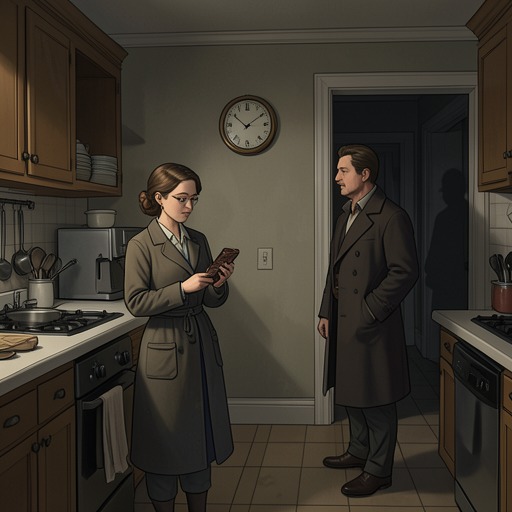
Poisoned chocolates
Partners in CrimePoisoned chocolates turn an apparently eccentric village scare into a threat concealed within a household. Sent anonymously to Thurnly Grange and shared among its residents, they contain enough arsenic to make those who eat them ill, but not enough to kill. A repeated pattern across three country houses encourages the explanation of a local prankster; a scrap of the parcel’s original label instead points back to someone in Lois Hargreaves’s home. The chocolates’ significance lies in that double use: they are both a real poison and a means of misdirection.
The First Incidents
About a week before Lois consults the detectives, a box arrives through the post without any indication of its sender. Lois is not especially fond of chocolate, but other people in the house are, and the box is passed around. Everyone who has eaten some becomes ill. The doctor takes the remaining chocolates away for analysis, which confirms that they contain arsenic. The amount is sufficient to cause illness, not death.
The incident is not isolated. Dr. Burton tells Lois that it is the third such occurrence in the neighborhood: in each case, a large house has been selected and its inhabitants have fallen ill after eating mysterious chocolates. That repetition makes the sweets seem like the signature of a local person of weak intellect playing a cruel practical joke. Dr. Burton attributes the attacks to Socialist agitation, an explanation Lois considers absurd, though she acknowledges that there are malcontents in the nearby village and that they might be involved. He urges her to put the matter in the hands of the police.
The Parcel’s Trace
Lois’s hesitation to involve the police turns on a detail of the wrapping. She habitually draws three intertwined fish whenever she has a pencil in hand. On an earlier occasion, at the breakfast table, she had marked something in a newspaper and absent-mindedly sketched the fish on the label of a parcel of silk stockings from a London shop. She later recognizes the same little drawing on the surviving corner of the brown paper in which the chocolates were sent. Most of the original label has been torn away, but the mark remains.
The fish do not identify a particular culprit. They do, however, establish a strong presumption that the sender belongs to the household: the chocolate parcel appears to have reused paper from the stockings parcel Lois had marked. For the detectives, this makes the wrapping more than disposable packaging. A routine, private doodle has become an unintended link between two parcels and a clue to the chocolates’ origin.
A Threat Behind the Diversion
Lois admits that she may want the matter hushed up, despite the evidence pointing inward. The earlier attacks therefore have a purpose beyond causing illness: their repetition helps establish the impression of a neighborhood maniac. Tuppence reasons that the small quantity of arsenic in the chocolates is part of that design. The incidents direct attention toward a local eccentric and away from the possibility that the real sender is inside the targeted household.
Tuppence suspects that the apparent prank is a blind for a deliberate plot against Lois herself. Her suspicion is connected to Lois’s recent inheritance: she has come into a substantial amount of money under the will of Lady Radclyffe. The evidence establishes the proposed connection and the danger the chocolates suggest, but does not yet identify the sender or prove who stands to benefit. The sweets thus leave the case poised between a staged pattern of harmless-looking attacks and a specific threat whose apparent randomness may be its cover.
Role in the Case
The chocolates function at once as poison, evidence, and camouflage. Their low arsenic content produces illness without death; their circulation among several large houses supports the false appearance of a general local nuisance; and the torn label gives investigators a reason to look inside Thurnly Grange. Each feature alters the meaning of the others. What first looks like an anonymous parcel in a village prank becomes a clue to household access and a possible attempt to target an heiress while obscuring the motive.
The case also depends on a contrast between the chocolates’ ordinary social role and their evidentiary force. They are passed around because the household likes them, yet that shared treat exposes its recipients to poison. The decisive clue is not a message or a signature, but a drawing Lois made without thinking. A familiar mark, accidentally preserved on damaged wrapping, punctures the story of an unknown local troublemaker and shifts suspicion toward the people closest to the parcel’s destination.